Hospitals
Specialties & Packages
Health Hub
Patients & Visitors




 EN
EN
 e-Shop
 Find A Doctor
 Request an Appointment
 International Patient
 +603 4141 3000
 +603 4141 3131



Building a Greener, Healthier Future
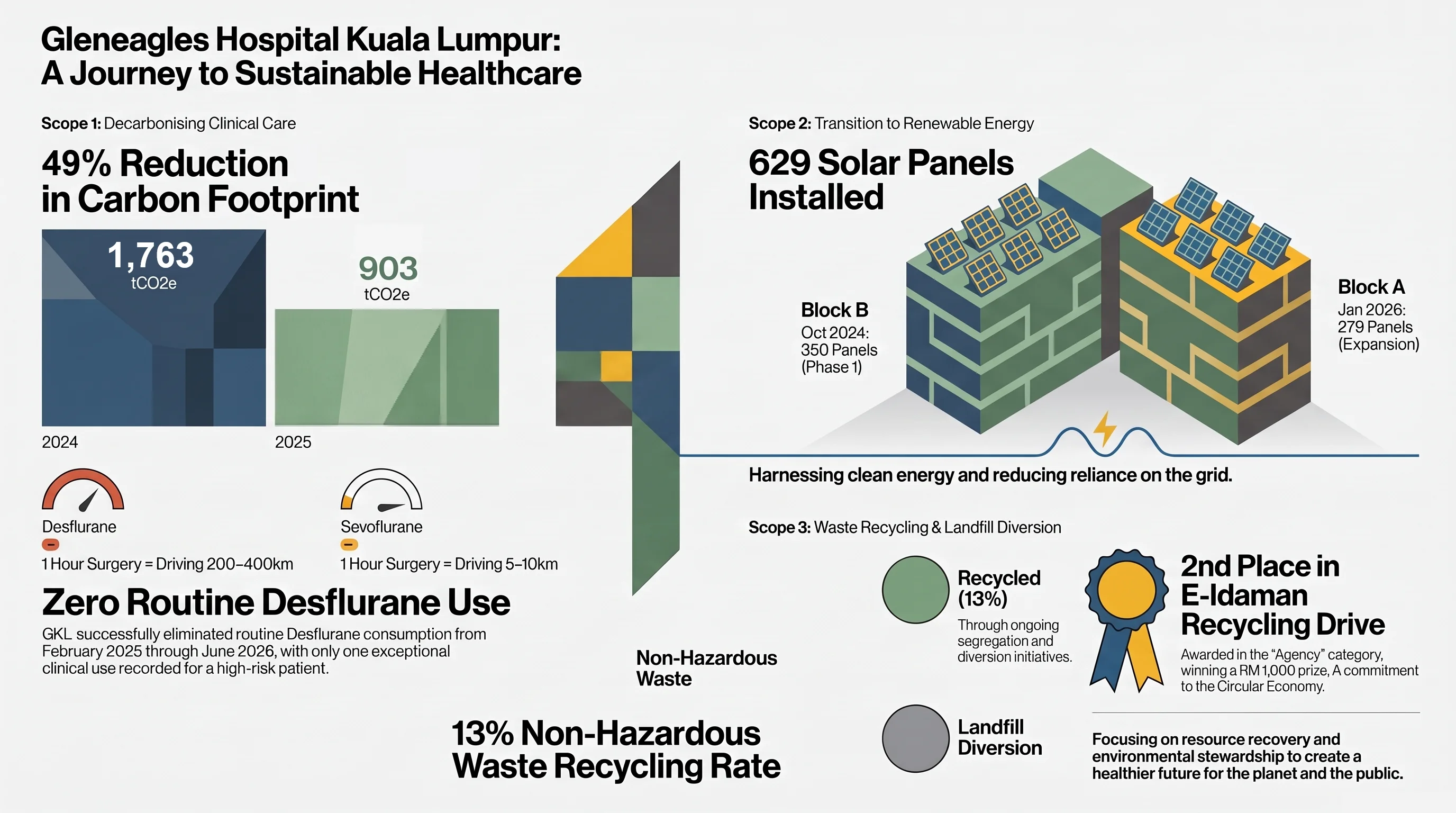
At Gleneagles Hospital Kuala Lumpur, we believe that caring for human health goes hand-in-hand with protecting our planet. Through targeted decarbonization, clean energy adoption, and waste reduction, we are transforming hospital operations to safeguard the environment for generations to come.
Our Strategic Sustainability Framework
Our sustainability strategy aligns healthcare delivery with ecological responsibility, focusing on four interconnected pillars:
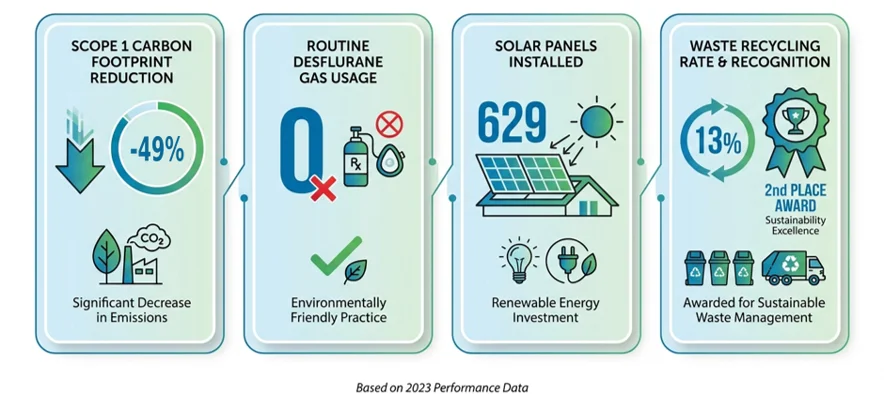
At-a-Glance Impact & Key Milestones
Minimizing Anaesthetic Gas Footprint
Anaesthetic gases contribute directly to healthcare sector greenhouse gas emissions. Desflurane carries a significantly higher Global Warming Potential (GWP) compared to alternative agents like Sevoflurane:
Our Achievement
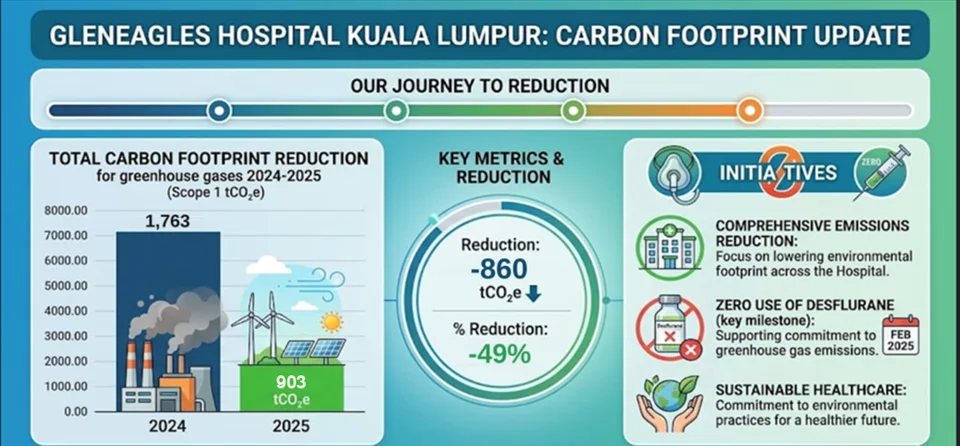
Through targeted clinical interventions and the structured phase-out of purchases, Gleneagles Hospital Kuala Lumpur successfully phased out routine desflurane use. Between February 2025 and June 2026, routine usage remained at 0 vials, with only 1 exceptional clinical usage in February 2026 dedicated to complex care for a patient with renal and liver failure. This single transition drove our 49% overall drop in direct Scope 1 emissions.
Powering Healthcare with Rooftop Solar Energy
To reduce our indirect emissions from electricity consumption, Gleneagles Hospital Kuala Lumpur executed a multi-phase solar expansion project across campus rooftops:
By expanding clean energy generation, Gleneagles Hospital Kuala Lumpur is building an energy-resilient facility while steadily advancing toward its broader Scope 2 carbon reduction targets.
Promoting Landfill Diversion & Resource Recovery
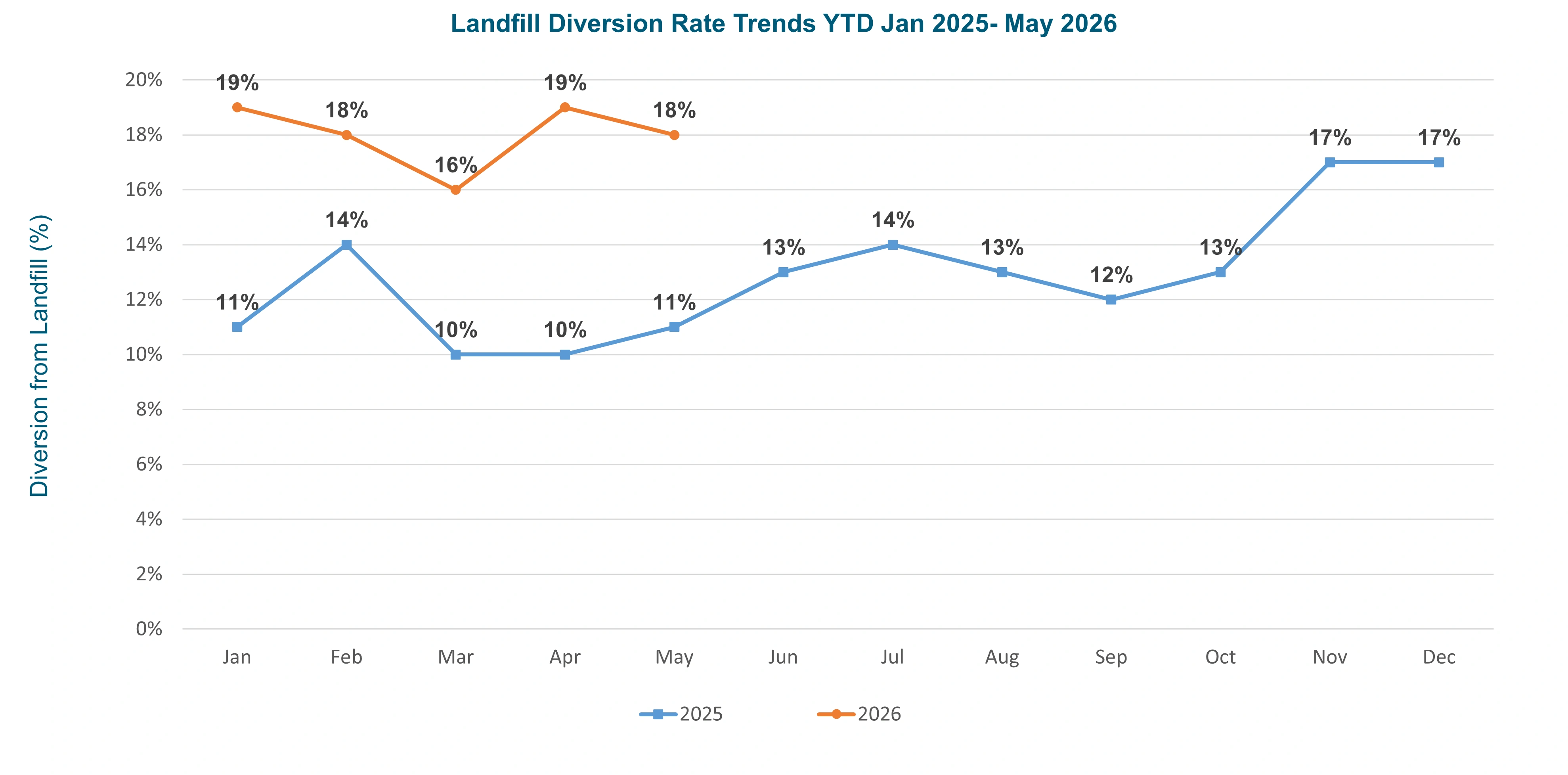
Managing healthcare waste responsibly is crucial to reducing environmental contamination and conserving natural resources. Through rigorous waste segregation and employee education, Gleneagles Hospital Kuala Lumpur achieved a 13% recycling rate for non-hazardous waste in 2025.
Award-Winning Community Action
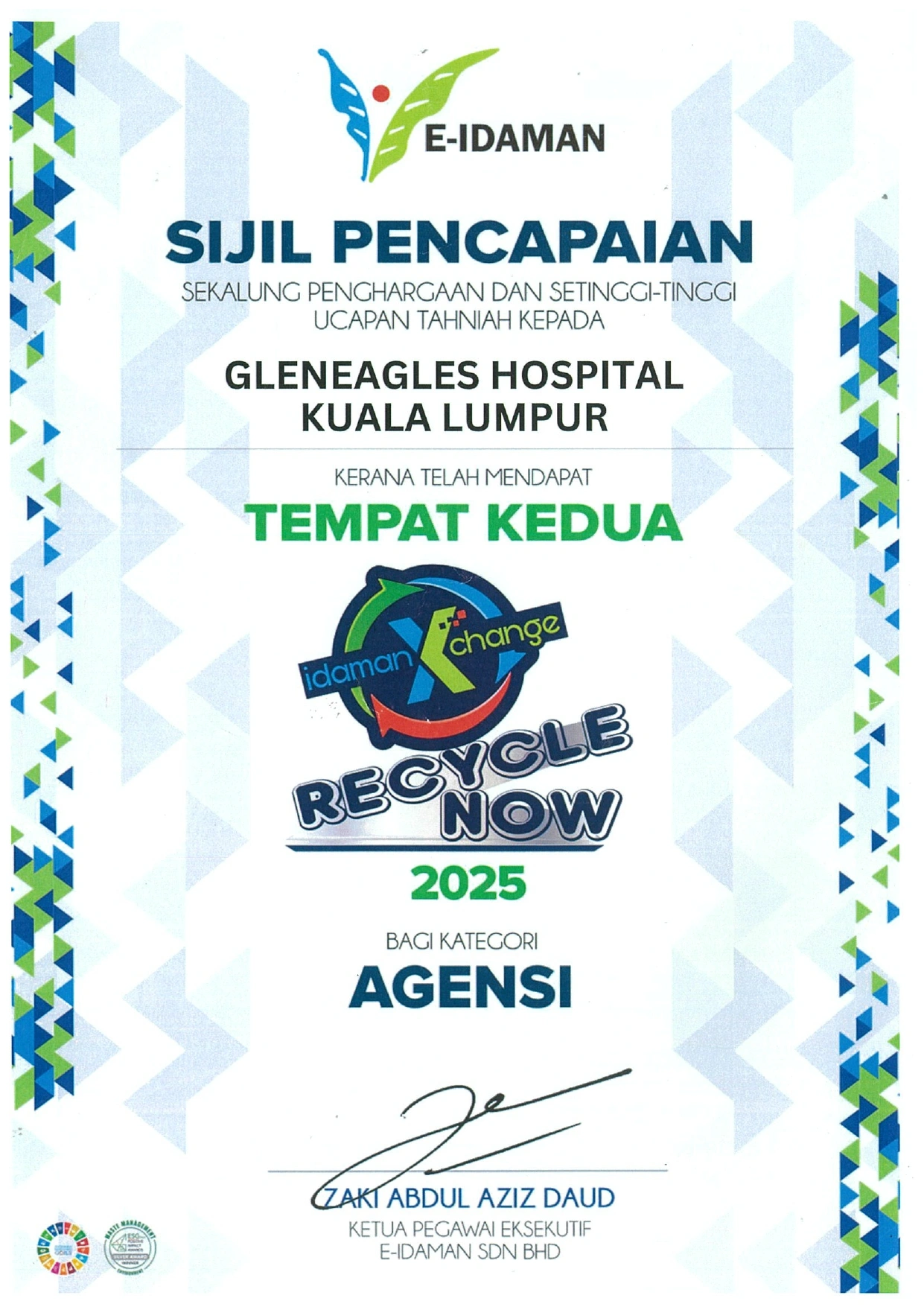
In recognition of our landfill diversion efforts, Gleneagles Hospital Kuala Lumpur was awarded 2nd Place (Agency Category) in the E-Idaman Recycling Drive Competition 2025 (idamanXchange RECYCLE NOW) for "Most Items Recycled," receiving a prize of RM 1,000. This recognition highlights the collective dedication of our staff and community toward embedding green habits into everyday operational practices.
Join Us on Our Journey
Sustainability is a continuous commitment to continuous improvement. Whether you are a patient, healthcare professional, or community partner, we invite you to support our green initiatives as we work together toward a healthier population and a healthier planet.

Wait a minute
Wait a minute