Hospitals
Specialties & Packages
Health Hub
Patients & Visitors



 EN
EN
 e-Shop
 Find A Doctor
 Request an Appointment
 International Patient
 +604 222 9111
 +604 222 9199


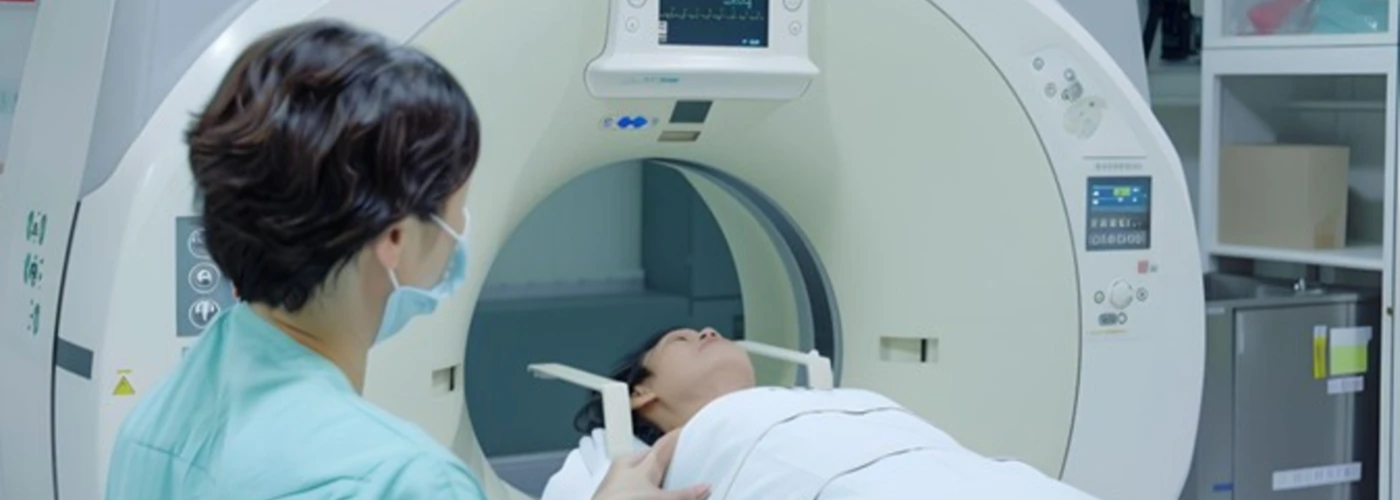
A CT scan—short for Computed Tomography scan—is one of the most advanced imaging tools used in modern medicine. Unlike a standard X-ray, a CT scan produces detailed cross-sectional images of the body using a combination of X-rays and computer technology. These layered images allow doctors to view bones, soft tissues, organs and blood vessels with remarkable clarity, helping them diagnose medical conditions quickly and accurately.
A CT scan uses a rotating X-ray machine that moves around your body, capturing multiple images from different angles. A computer then assembles these images into thin slices, making it possible to see structures that cannot be clearly viewed with traditional X-rays. Because of its precision, a CT scan is often one of the first tests requested when doctors need fast, reliable information.
CT scans are commonly performed on:
This makes the CT scan an essential tool in emergency care, cancer screening, trauma assessment and surgical planning.
While it may sound complex, the process is simple from the patient’s perspective. You lie on a motorised table that slides into a circular scanner. As the machine rotates, it emits X-rays that pass through your body and are captured by detectors. Each rotation creates a “slice”, and hundreds of slices combine to form a highly detailed image.
In some cases, doctors may use a contrast dye to enhance visibility of blood vessels, organs or tumours. This contrast can be given orally or through an injection, depending on the area being examined.
One of the greatest advantages of a CT scan is its ability to detect a wide variety of medical conditions, including:
A CT scan is often used in emergency departments to quickly assess internal bleeding, organ damage or fractures that may not be visible on X-ray.
CT scans help detect the presence, size and location of tumours. They are also used to monitor treatment progress, check for recurrence and assist in radiation therapy planning.
A CT scan can identify stroke, bleeding, swelling, skull fractures and other abnormalities affecting the brain.
CT scans can evaluate lung infections, blockages in blood vessels, heart abnormalities and coronary artery disease through specialised CT imaging.
Doctors commonly use CT scans to assess conditions involving the liver, kidneys, pancreas, intestines or reproductive organs.
Most CT scans are quick and painless, usually lasting between 5 to 20 minutes. Here is what typically happens:
If contrast dye is used, you might feel a warm sensation or metallic taste for a few seconds—this is normal and usually fades quickly.
It usually takes 1 to 2 weeks to receive your CT scan results, however it can take up to 4 weeks depending on urgency and your location. The photos will be reviewed by a radiologist, who will then send the findings to your referring doctor.
You may need to schedule a follow-up session to discuss the results. If you haven't heard back within four weeks, contact the doctor who referred you. They will explain the results and discuss the next steps, which may include further tests depending on why you had your CT scan.
If you have any issues or can’t comprehend your results, you are advised to contact a healthcare expert.
CT scans do involve exposure to radiation, but the amount is carefully controlled and kept as low as possible. For most patients, the benefits far outweigh the risks, especially when rapid diagnosis is needed. Children and pregnant women may require alternative imaging options depending on the situation.
If you have allergies, kidney issues or have reacted to contrast dye in the past, be sure to inform your doctor before the scan.
CT scans offer fast, highly detailed cross-sectional images of bones, tissues, and vessels. Other key benefits of a CT scan includes:
CT scans have revolutionised medical imaging by providing accurate, three-dimensional views of the body that support faster and more effective diagnoses.
Get in touch with us to book an appointment with radiologists at Gleneagles Hospital Penang today. We assure you the best possible care tailored to your specific needs.

Wait a minute
Wait a minute