Hospitals
Specialties & Packages
Health Hub
Patients & Visitors



 EN
EN
 e-Shop
 Find A Doctor
 Request an Appointment
 International Patient
 +604 222 9111
 +604 222 9199



At Gleneagles Hospital Penang, we are committed to providing care that truly makes a difference care that’s high in quality, centered on you, and delivered with compassion. Gleneagles Hospital Penang has embraced the Value Driven Outcome concept since year 2019.
Our Value Driven Care approach means focusing on what matters most: better health outcomes, better experiences, and better value for every patient. By using our resources wisely and continuously improving how we care for you, we’re building a healthier, more sustainable future for our patients and community.

Value Driven Outcome (VDO) means providing high quality, safe, and patient-centered care while using our resource wisely. In simple terms: Better health results, better patient experience, and better use of resources.
Our VDO framework helps ensure that every patient benefits from:


We use evidence based practices to ensure safe and effective treatment for every patient.

We listen to your needs, involve you in decisions, and make your comfort our priority.

By reducing waste and optimizing care processes, we make healthcare more sustainable.

We measure outcomes transparently and use data to improve care delivery.
At Gleneagles Hospital Penang, we’re working every day to deliver care that truly makes a different for you, your family, and our community.
At Gleneagles Hospital Penang, we provide a range of specialized procedures to help our patients recover, move better, and live healthier lives. Below are the procedures we would like to share with you.
All our procedures are performed by experienced specialists using advanced medical technology and evidence based practices. Our goal is to ensure safe, effective, and compassionate care every step of the way.
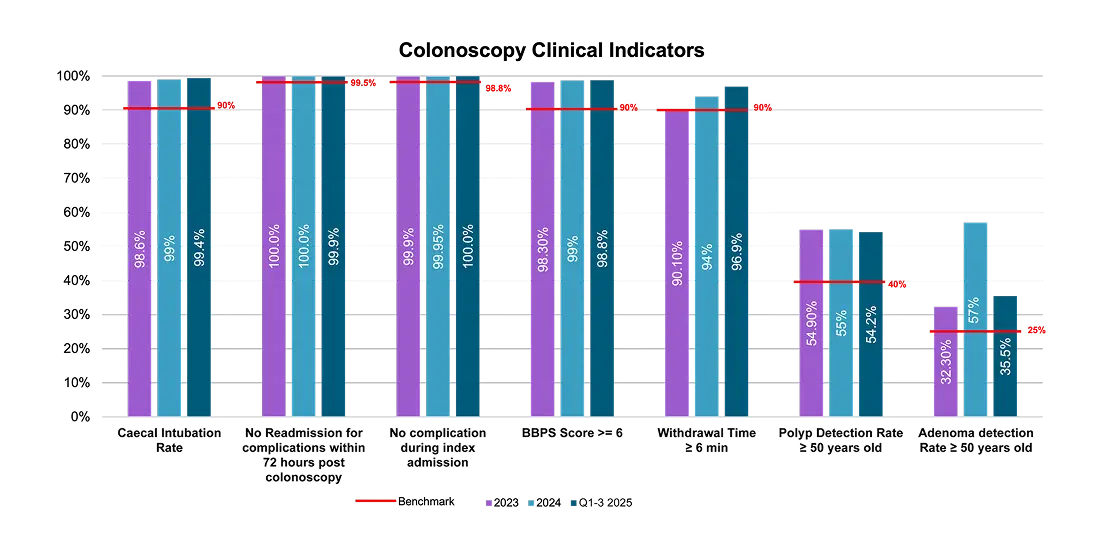
A Colonoscopy is a procedure where a doctor uses a flexible tube with a camera to examine the inside of your large intestine (colon).
It helps detect early signs of colon cancer, polyps, inflammation, or other digestive problems.
At our hospital, we follow strict quality measures to ensure your colonoscopy is safe and effective:
Our commitment is to provide you with the safest, most effective colonoscopy experience. If you have any questions, please discuss them with your healthcare provider.
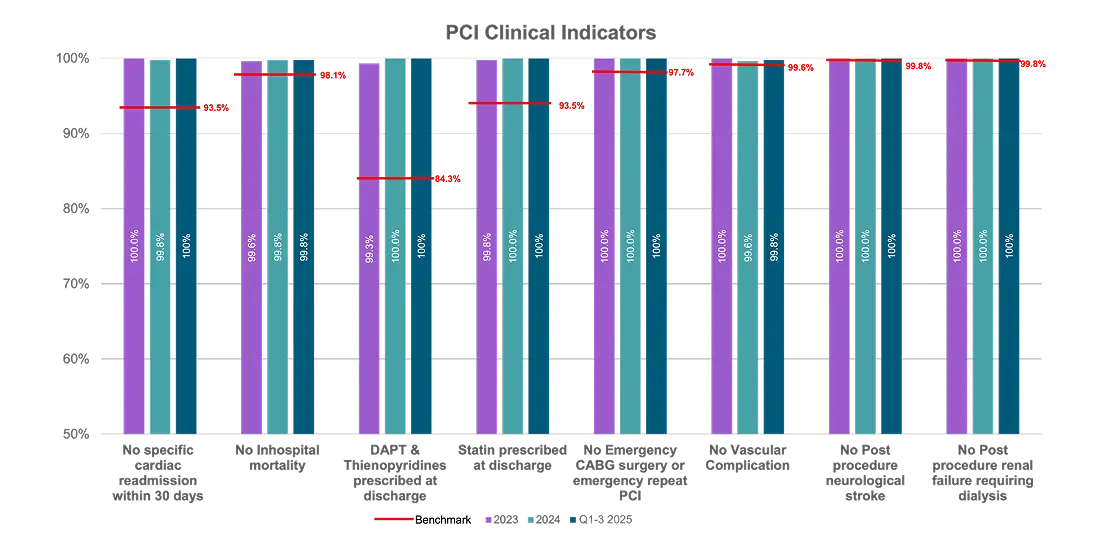
Also known as angioplasty with stent, PCI is a minimally invasive procedure to open blocked or narrowed heart arteries.
It helps restore normal blood flow to the heart, reducing chest pain and preventing heart attacks.
At our hospital, we ensure that patients undergoing PCI receive safe and effective care. Key quality measures we monitor include:
These measures reflect our commitment to providing safe, high quality heart care. Our team monitors every patient closely to ens ure the best outcomes.
At Gleneagles Hospital Penang, your experience and recovery after Percutaneous Coronary Intervention (PCI) are just as important as the procedure itself. We track Patient Reported Outcome Measures (PROMs) to understand how the treatment affects your heart health, daily life, and overall well being.
PROMs are surveys or questionnaires you complete to share your own perspective on your symptoms, physical abilities, and quality of life after PCI.
Patients may report on:
Your feedback helps us:
By combining advanced PCI techniques with your feedback, we aim to reduce symptoms, restore heart function, and help you return to a healthy, active life with confidence.
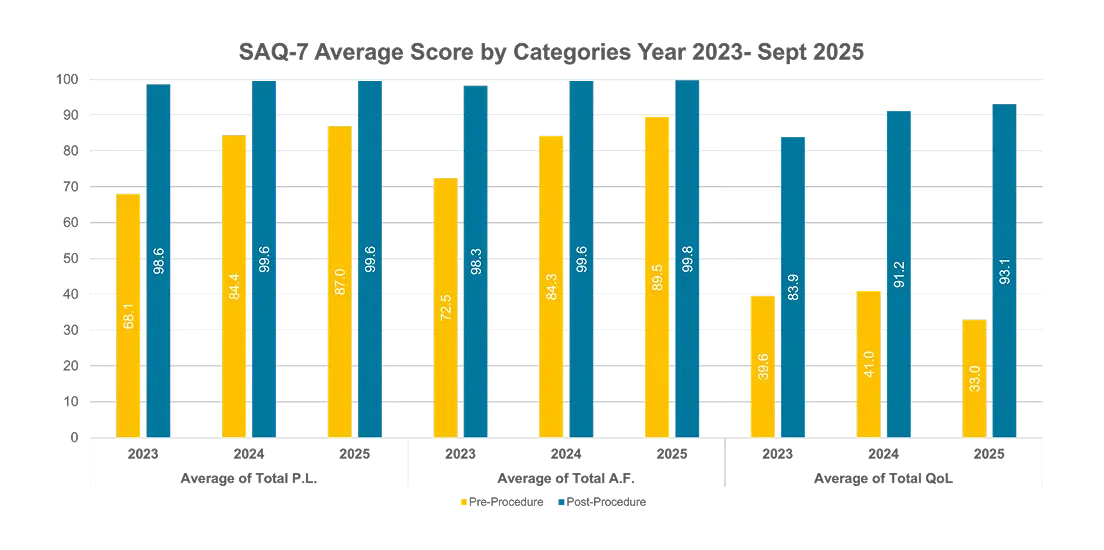
The SAQ-7 (Seattle Angina Questionnaire – 7 items) is a short questionnaire used to measure how angina (chest pain) affects your daily life, physical function, and quality of life after PCI procedure.
Patients complete the SAQ-7 before PCI and at follow-ups 1 month post-PCI, to monitor recovery. By comparing your scores over time shows whether your treatment has led to meaningful improvements in your symptoms and daily life. Minimum Clinically Important Difference (MCID) refers to the smallest change in your SAQ-7 score that is considered meaningful to you. If your score improves by at least the MCID, it means your recovery or treatment benefit is noticeable and meaningful in your daily life.
It is noted that the patients are experiencing improvements in their physical limitations and a reduction in angina frequency following the procedure. This reflects a significant enhancement in their quality of life post-procedure.
 Remark:
A Total Knee Replacement is a surgical procedure to replace a damaged or worn out knee joint with an artificial implant.
It helps relieve pain, improve movement, and restore function in people with severe arthritis or knee injury.
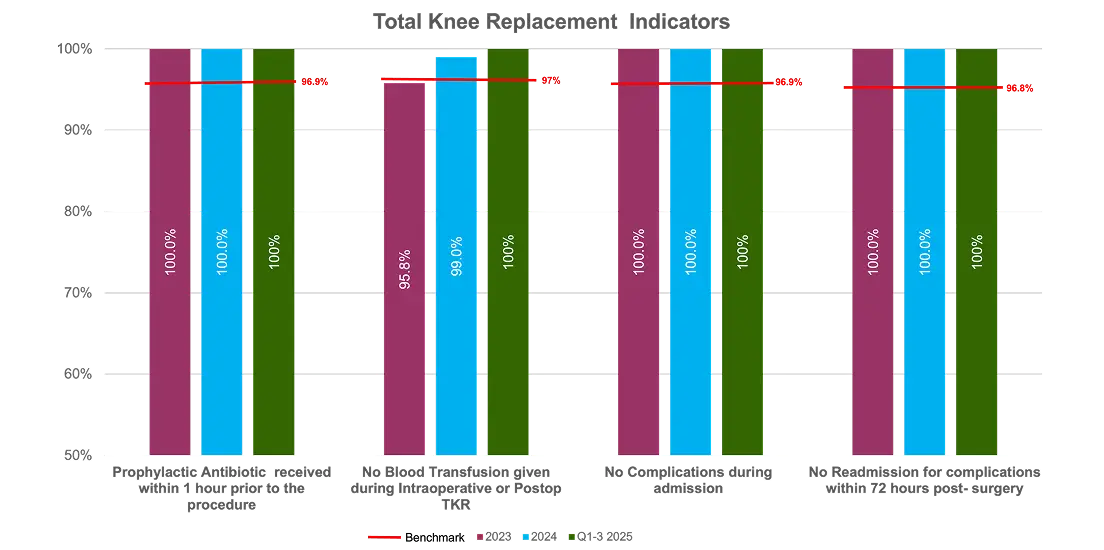
At our hospital, your safety and recovery are our top priorities. For patients undergoing TKR surgery, we carefully monitor several key areas to provide the highest quality care:
Our commitment is to support your healing journey from start to finish with safe, evidence based practices. If you have any questions, please speak to your care team.
At Gleneagles Hospital Penang, we believe that your experience and recovery matter just as much as the surgical result. That’s why we track Patient Reported Outcome Measures (PROMs) information you share with us about how you feel and function after your TKR.
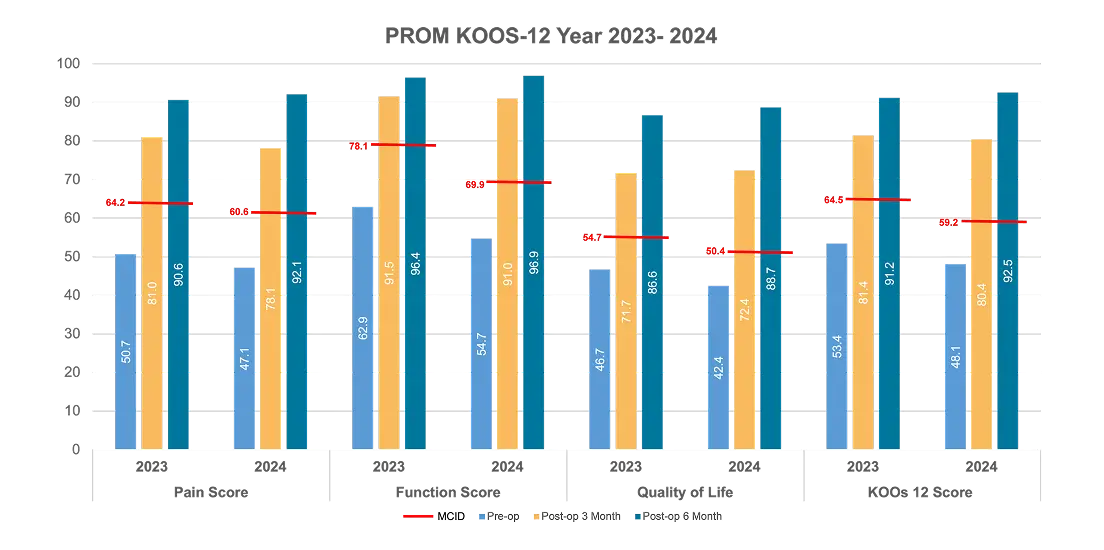
PROMs are direct feedback from patients about their health, without interpretation by doctors or staff. They help us understand your pain levels, mobility, daily function, and overall satisfaction after surgery at 3 months and 6 months post-operation.
We invite patients to share their experience through simple questionnaires at different stages of recovery. These often include:
Your feedback helps us:
By listening to our patients and learning from their outcomes, we aim to ensure that every knee replacement leads to lasting relief, better movement, and a return to active living.
The Minimum Clinically Important Difference (MCID) is a benchmark used in healthcare to determine whether a change in your PROM score reflects a meaningful improvement in your daily life. Rather than looking only at numerical changes, MCID helps indicate whether you feel better whether that is less pain, improved mobility, or better function after TKR surgery. Reaching the MCID means your recovery progress is noticeable and clinically valuable.
For Total Knee Replacement (TKR), we will include the patient’s pre-operative score as a reference point to determine whether their PROM results show improvement at 3 months and 6 months post-operation, as outlined below:
An ACL Reconstruction repairs or replaces a torn anterior cruciate ligament one of the key ligaments that stabilize your knee.
It’s often needed after sports injuries or trauma that cause knee instability or difficulty with movement.
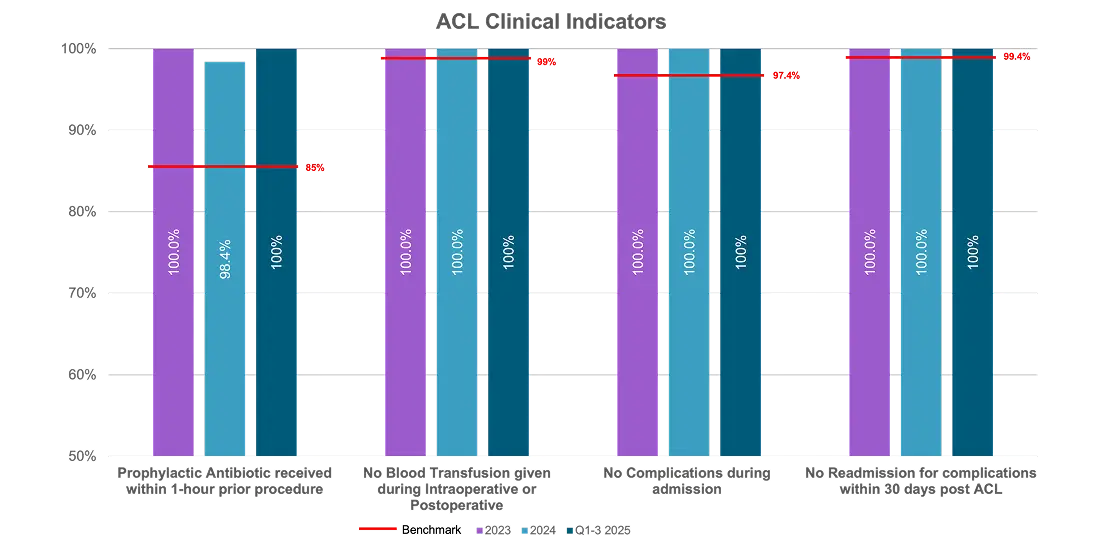
Your safety and recovery are our top priorities at GHP. For patients undergoing ACL surgery, we carefully monitor several key areas to provide the highest quality care:
Our commitment is to support your healing journey from start to finish with safe, evidence-based practices. If you have any questions, please speak to your care team.
At Gleneagles Hospital Penang, we believe that your experience and after ACL Reconstruction just as much as the surgical procedure itself. That’s why we track Patient Reported Outcome Measures (PROMS) feedback directly from you about your knee function, pain, and overall well being.
PROMs are questionnaires or surveys you fill out about your knee health, pain, and daily activities. They help us understand how surgery has impacted your life from your perspective.
Typical PROMs may include:
Your feedback allows us to:
By combining surgical expertise with patient feedback, we aim for successful ACL reconstruction outcomes – helping you return to an active, confident lifestyle safely and effectively.
The International Knee Documentation Committee (IKDC) score is a PROM that measures knee symptoms, function, and sports activity after ACL reconstruction.
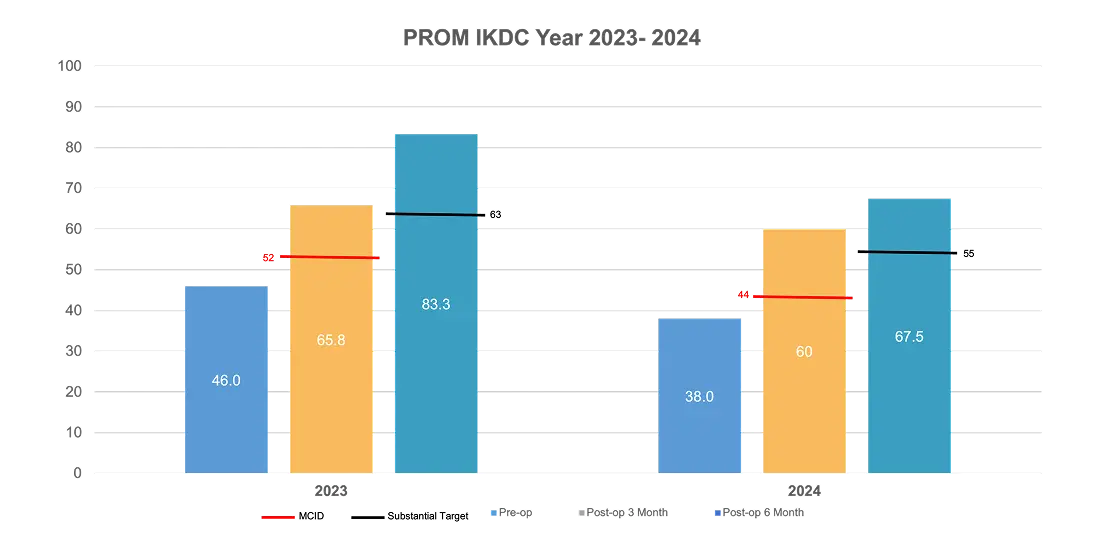
The Minimum Clinically Important Difference (MCID) is the smallest change in your IKDC score that is meaningful to you as a patient. If your score improves by at least the MCID, it means your recovery has made a noticeable and valuable difference in your pain, knee function, or ability to return to daily activities and sports.
For Anterior Cruciate Ligament reconstruction (ACL), we will include the patient’s pre-operative score as a reference point to determine whether their PROM results show improvement at 3 months and 6 months post-operation, as outlined below:

Wait a minute
Wait a minute