


Loading...
Wait a minute


A breast self-examination (BSE) is a simple physical technique that women can use to check for skin changes or lumps and to become familiar with the normal appearance and feel of their breasts.
BSE is an essential part of breast health awareness and can help in the early detection of any changes that might indicate a potential issue, such as breast cancer.
As an essential part of breast cancer screening, BSE should be performed once a month, preferably 3 to 5 days after your period ends at the same time each month. Post-menopausal women can conduct a breast self-exam on a consistent day each month, whether it be the 1st or 15th day of the month.
It is important to note that breast self-exams complement but do not replace regular mammograms or clinical breast exams. Mammograms remain a vital component of breast health screening.
Here is a step-by-step guide on how to perform a breast self-examination correctly. There are three main steps involved.
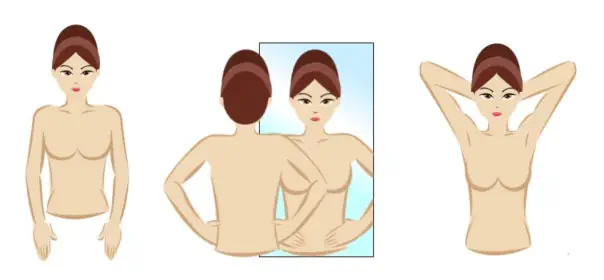
Stand in front of a mirror with your arms at your sides (shirtless). Then, perform the following steps:
Second, examine your breasts physically following these steps:
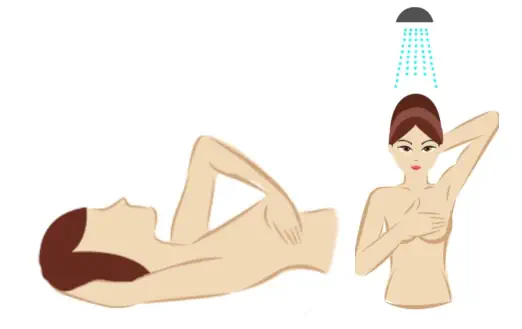
You can also lie down and inspect your breasts. This would be convenient for larger breasts as the tissues spread out, making examining easier.
Follow these guidelines when examining lying down:
BSE should be done calmly and relaxed, taking enough time to examine each breast thoroughly. As it only needs to be done once a month and takes just a few minutes, it is essential to do it slowly and carefully.
Avoid using fingertips. The pads of your fingers are more sensitive; therefore, they can be more accurate in feeling for any unusual changes like lumps. The back of your fingers and palm can also be used if the finger pads are not sensitive enough.
Applying different pressures to feel all the tissues in your breast is crucial. Light pressure to feel the tissues on the surface of the breast; medium pressure to feel tissues under the surface; firm pressure to feel deeper tissues close to the chest and ribcage. Clarify with your doctor if you need clarification on the difference between pressures.
BSE is easy to perform and takes only a couple of minutes. In addition, regular BSE can help you become familiar with the usual look and feel of your breasts, making it easier to detect any changes.
Here are a few changes to look for when performing a BSE:
Inform your doctor promptly if you notice any in your breasts, such as a new lump, nipple discharge, tenderness, or changes in the skin appearance. While not all lumps are cancerous or a cause for concern, having any abnormalities evaluated professionally is vital.
If you have a family history of breast cancer, you should schedule regular breast exams and mammograms with your doctor.
Get in touch with us to book an appointment with our team of gynaecologists today, or find out more about our Obstetrics and Gynaecology Services at your nearest Gleneagles Hospital.


Wait a minute