Hospitals
Specialties & Packages
Health Hub
Patients & Visitors



 EN
EN
 e-Shop
 Find A Doctor
 Request an Appointment
 International Patient
 +6088 518 888
 +6088 518 911


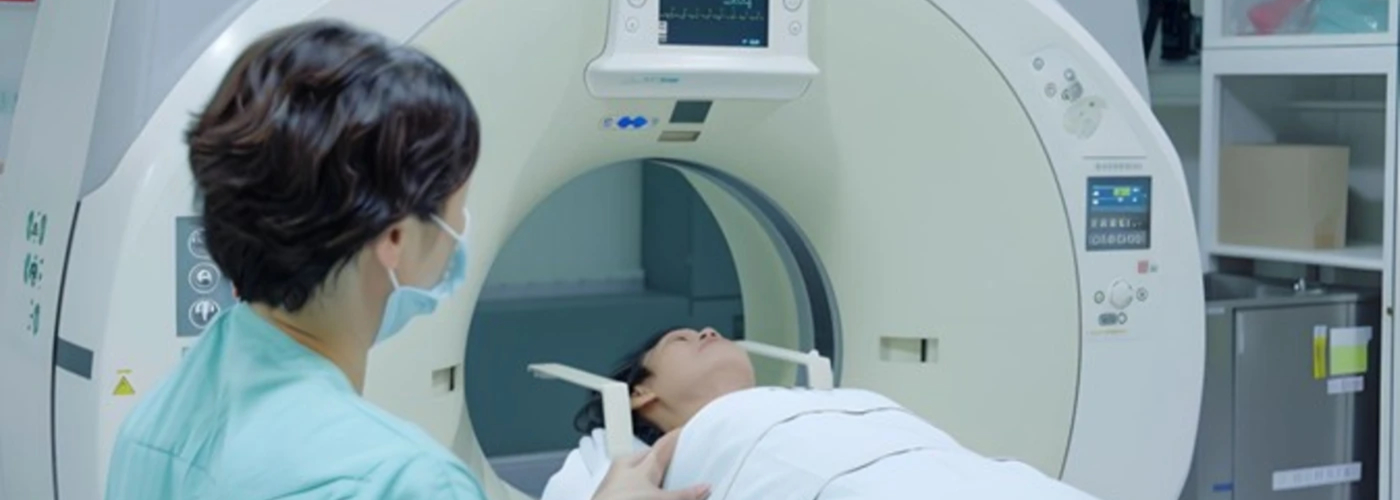
A computerised tomography (CT) scan is a medical imaging technology that uses X-rays and computer processing to provide detailed cross-sectional images of the body. These images, known as "slices", provide a clear view of internal organs, bones, and soft tissues, allowing clinicians to diagnose and monitor a variety of illnesses.
When it comes to medical innovation, few technologies have had as profound an impact as the CT scan. Short for computed tomography, this imaging technique has revolutionised the way doctors view the human body and diagnose disease. Before CT scans became available, physicians often had to rely on limited X-rays or invasive procedures to understand internal problems. Today, CT scanning stands as a cornerstone of diagnostic medicine, offering speed, precision, and reliability.
The first CT scanner was developed in the early 1970s by British engineer Sir Godfrey Hounsfield and South African physicist Allan Cormack. Their invention was so groundbreaking that it earned them the Nobel Prize in Medicine. What made CT unique at the time was its ability to combine X-ray technology with computer processing, producing cross-sectional images that revealed far more detail than traditional imaging methods.
This innovation marked a turning point: for the first time, doctors could “slice” through the body virtually, without making a single incision. It was the beginning of a new era in diagnostics.
A CT scan is a powerful diagnostic tool that produces detailed images of a variety of tissues, including the lungs, bones, soft tissues, and blood arteries. If you have had a stroke, a CT scan can help doctors establish the location of the blockage or bleeding in your brain, allowing them to make more educated treatment decisions.
A CT scan is useful for identifying both normal and pathological structures in the body, in addition to diagnosing illnesses such as strokes. It does this in a painless, non-invasive, and extremely accurate manner, giving doctors critical information about your health.
Computerised tomography is also an effective tool for planning and preparing for specific procedures, such as awake craniotomy (brain surgery to remove brain lesions) and deep brain stimulation surgery. It is also useful for planning and guiding radiation (cancer treatment), needle biopsies, and other minimally invasive procedures.
In Malaysia, CT scan technology is widely employed in hospitals and medical centres for both diagnostic and procedural guidance, ensuring that patients receive the most accurate and efficient care.
The introduction of CT scanning quickly reshaped healthcare in several key ways:
In short, CT scans turned guesswork into evidence-based medicine.
A CT scan takes 10 to 20 minutes and is performed by a radiographer at a hospital. Before the scan, you may be given a contrast material (dye) to help emphasize specific locations in the images. This can be given orally, as an injection, or through the rectum. If injected, you may feel heated, flushed, or have a metallic taste in your mouth; however, these sensations normally disappear rapidly.
During the scan, you will lie on a flat bed while the CT scanner, a giant ring-shaped equipment, rotates around you. To ensure clear images, the radiographer, who operates the scanner from another room, will advise you to remain still and, on occasion, hold your breath.
If you were given a contrast medium during your CT scan, you may need to wait up to 30 minutes to see if you had any reactions. If you are an outpatient, you can leave the hospital soon afterward.
Over time, the technology has grown more sophisticated. Modern CT machines are used in ways the original inventors could hardly have imagined:
These advances mean that CT scans are not just diagnostic tools, but also instruments for prevention, planning, and follow-up care.
While CT scanning is a powerful technology, it does raise valid concerns — particularly around radiation exposure. A single CT scan uses more radiation than a standard X-ray, and repeated scans over time could increase long-term risks.
To address this, modern machines are designed to minimize exposure through low-dose protocols. At the same time, doctors carefully evaluate whether a CT scan is truly necessary, balancing the potential benefits against the risks. The introduction of artificial intelligence is also helping optimize scans, ensuring patients receive the lowest dose possible while still producing clear, accurate images.
For patients, the significance of a CT scan often goes beyond the technical details. It can mean early detection of a life-threatening condition, reassurance when symptoms are unexplained, or a roadmap for effective treatment. Families gain peace of mind knowing that doctors have access to accurate information, reducing uncertainty in critical moments.
For clinicians, it means faster decisions, fewer invasive procedures, and better outcomes. In many ways, CT scanning has become the bridge between suspicion and certainty in medicine.
The evolution of CT technology is far from over. Researchers are working on scanners that are faster, safer, and capable of capturing even finer detail. AI-driven imaging analysis may soon allow radiologists to detect subtle changes invisible to the human eye, improving early detection of diseases like cancer or heart conditions.
There’s also growing interest in spectral CT scanning, which can differentiate materials within the body, providing richer diagnostic information. These innovations promise to expand the role of CT scans even further, reinforcing their place as one of the most vital tools in healthcare.
The story of the CT scan is more than just a tale of medical technology. It’s a story of how innovation reshaped healthcare, saving lives and improving outcomes worldwide. What began as a radical idea in the 1970s is now an everyday tool in hospitals, relied upon by doctors and trusted by patients. As technology advances, CT scanning will continue to evolve, offering new possibilities for early diagnosis, personalized treatment, and better care for generations to come.
Get in touch with us to book an appointment with radiologists at Gleneagles Hospital Kota Kinabalu today. We assure you the best possible care tailored to your specific needs.

Wait a minute
Wait a minute